
⚠️ First, the safety line: chest pain, a heartbeat that will not settle, fainting or sudden breathlessness are emergency symptoms — get urgent medical help rather than reading on. This article covers everyday, stress-related experiences and is general information, not medical advice. Nothing here, and no wellbeing device, is a treatment or cure for any medical condition.
| The honest answer | There is almost always a reason — it is just physical and cumulative, not a single obvious event. |
| Common causes | Poor sleep, too much caffeine, skipped meals, chronic stress and high cortisol, and no downtime. |
| Fastest reset | Slow breathing with a long exhale — in for 4, out for 6–8, for a few rounds. |
| What helps long-term | Steady sleep, balanced meals, daily movement and calming the vagus nerve. |
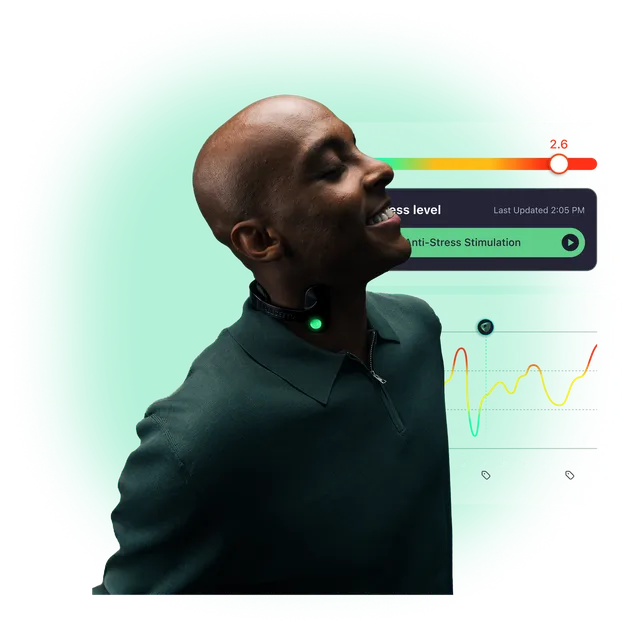
Few feelings are as unsettling as anxiety that seems to arrive without an invitation. Your heart picks up, your chest tightens, your thoughts start to spin — and when you scan your day for a cause, you come up empty. If you have found yourself asking “why do I feel anxious for no reason?”, the first thing worth knowing is this: there is almost always a reason. It is just not the kind that shows up as a single, obvious event. More often it is the sum of a dozen small, physical inputs that have quietly tuned your nervous system toward alarm.
Anxiety is not only a mental state. It is also a body state — which is why so many people meet it first as a thudding chest, covered in our guide to heart palpitations from stress and anxiety. When your brain perceives pressure — real or anticipated — it activates the sympathetic branch of the nervous system, the “fight-or-flight” response. Stress hormones rise, breathing speeds up, and blood is redirected to your muscles. This is brilliant if you need to sprint away from danger. It is far less helpful when it fires while you are answering emails, and it can produce the exact physical sensations we label as anxiety even when nothing threatening is in the room.
So “anxious for no reason” usually means “anxious for a reason I can’t immediately see.” Below are the everyday drivers that most commonly leave people feeling on edge, and the practical habits that help the body settle.
Think of these as dials rather than switches. No single one flips anxiety on by itself, but turn several up at once and your baseline can drift toward jittery and reactive.
Sleep and anxiety feed each other. A short or fragmented night leaves the emotional centres of the brain more reactive and the calming, regulating regions less able to keep them in check. The result is a lower threshold for stress the next day, so ordinary hassles feel bigger than they are. If your anxious days tend to follow restless nights, sleep is a sensible first place to look. Our guide on why you wake up at 3am and can’t fall back asleep digs into the night-time side of this loop. The hyperarousal model of insomnia describes a nervous system running above baseline around the clock, not only at night, which is why a bad night and an anxious day tend to arrive as a pair.
Caffeine is a stimulant that nudges the same physical system as stress: a faster heart rate, more alertness, and in sensitive people a distinctly wired, jittery edge. If you are drinking coffee through the afternoon, the buzz can overlap with anxious sensations and even linger into the evening, thinning your sleep. Many people are surprised at how much calmer they feel simply by moving their last cup to the morning. A systematic review and meta-analysis found that caffeine increased anxiety and provoked panic attacks in people with panic disorder at doses comparable to a few strong coffees — a clear signal that the dose and your own sensitivity both matter.
When you skip meals or run on refined carbohydrates and sugar, your blood sugar can spike and then crash. A sharp dip prompts the body to release stress hormones to bring it back up — and those hormones can feel almost identical to anxiety: shaky, irritable, foggy, on edge. Eating regularly and pairing carbohydrates with protein, fat and fibre helps smooth those swings so your mood has a steadier floor to stand on.
Cortisol is your main long-run stress hormone, and it is supposed to rise and fall in a daily rhythm. Under relentless pressure — deadlines, caretaking, financial worry, always-on notifications — that rhythm can flatten and stay elevated, keeping the body braced. Over time, a nervous system that never fully stands down starts to treat “alert” as its default. If this sounds familiar, our piece on daily habits to lower cortisol naturally is a good companion read. When it does not, the cost is what researchers call allostatic load — the wear caused by stress mediators that stay switched on.
Sometimes the issue is not a single stressor but a body that has forgotten how to downshift. When you rarely reach a genuinely relaxed state, the nervous system can get stuck in a low-grade state of alert — wired, tense and easily startled. That baseline hum is fertile ground for anxiety that seems to come from nowhere. We cover this pattern in depth in why you feel stuck in fight-or-flight mode.
Regular movement is one of the most reliable mood regulators we have, partly because it gives the stress response somewhere to go and helps the body return to baseline afterward. A sedentary, indoor day — little walking, little natural light — removes those steadying inputs. It is not a coincidence that a brisk walk outdoors so often takes the edge off.
Under the hood, most of these causes converge on one system: the autonomic nervous system, which runs on autopilot to manage things like heart rate, digestion and breathing. It has two branches. The sympathetic branch revs you up for action. The parasympathetic branch — led by the vagus nerve — calms you down and handles “rest and digest.”
Researchers often describe how responsive this calming branch is using the term vagal tone, commonly estimated through heart rate variability (HRV). In general, higher vagal tone is linked with a body that returns to baseline more smoothly after stress. Feeling anxious for no reason is, in many cases, the felt experience of a sympathetic system that is running a little too hot and a parasympathetic system that is not getting enough chances to take over. The encouraging part is that this balance is trainable — and most of the tools are free.
You do not need to fix everything at once. Pick two or three of these and practise them daily for a couple of weeks.
This is the fastest lever most people have. Breathe in gently through the nose for about four seconds, then out slowly for six to eight. A longer exhale gently engages the vagus nerve and tips the body toward calm, often within a handful of breaths. Keep it available for the moments anxiety spikes — before a meeting, in traffic, at bedtime. For more structured techniques, see our roundup of the best breathing exercises for anxiety and stress relief. A systematic review of slow breathing found consistent autonomic and psychological shifts at these slower rates. The National Institute of Mental Health has guidance on when anxious feelings warrant professional assessment.
Eat at regular intervals, build meals around protein, healthy fats, fibre and slower carbohydrates, and go easy on sugar and heavy caffeine. A body with stable blood sugar has one less reason to release stress hormones. Some foods also supply nutrients associated with a calmer nervous system — our guide to foods that calm the nervous system covers the useful ones.
A consistent bedtime, a dark and cool room, and a screen buffer before bed all help your body rehearse the wind-down it needs. Because sleep and anxiety reinforce each other, improving one often quietly improves the other.
A daily walk, a bike ride, some yoga or a few minutes of stretching all help discharge nervous energy and steady your mood. Getting some daylight, especially in the morning, supports a healthier stress rhythm across the day.
Humming, gargling, a cool splash of water on the face, unhurried time with people you like — these all engage the calming, social side of the nervous system. Alongside them, a growing category of at-home devices aims to stimulate the vagus nerve directly through the skin of the neck, an approach known as transcutaneous vagus nerve stimulation, or tVNS.
See the Pulsetto Vagus Nerve Device
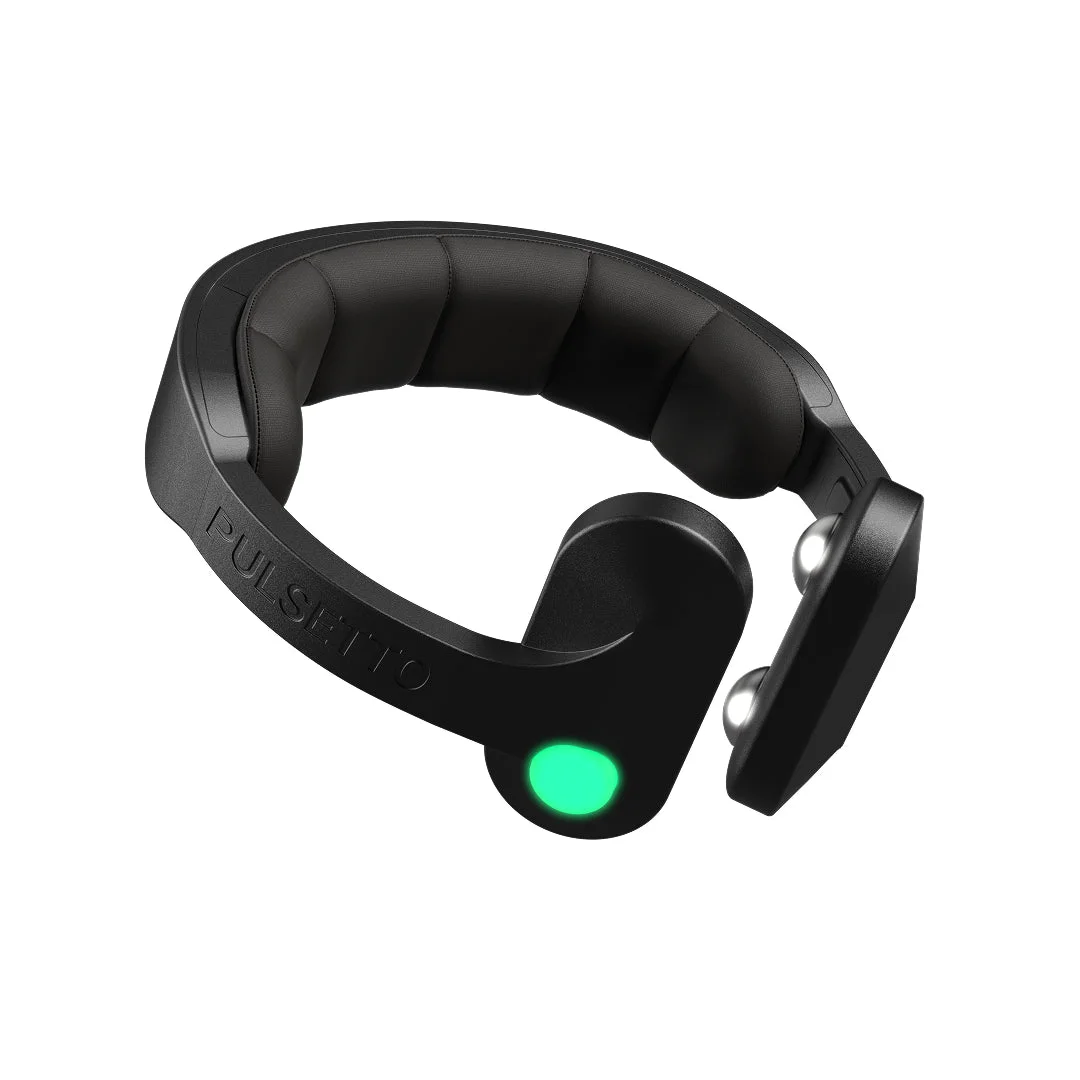
Pulsetto is one example of an at-home tVNS wearable. It rests on the neck, uses a little conductive gel so the gentle pulses travel comfortably, and runs short, app-guided sessions of around four minutes. You pick a program — stress, anxiety, sleep or burnout — set an intensity that feels comfortable, and relax while it runs. The idea is not to replace breathing, sleep or movement, but to make one more calming input easy to keep up with on the days it is hard to slow down.
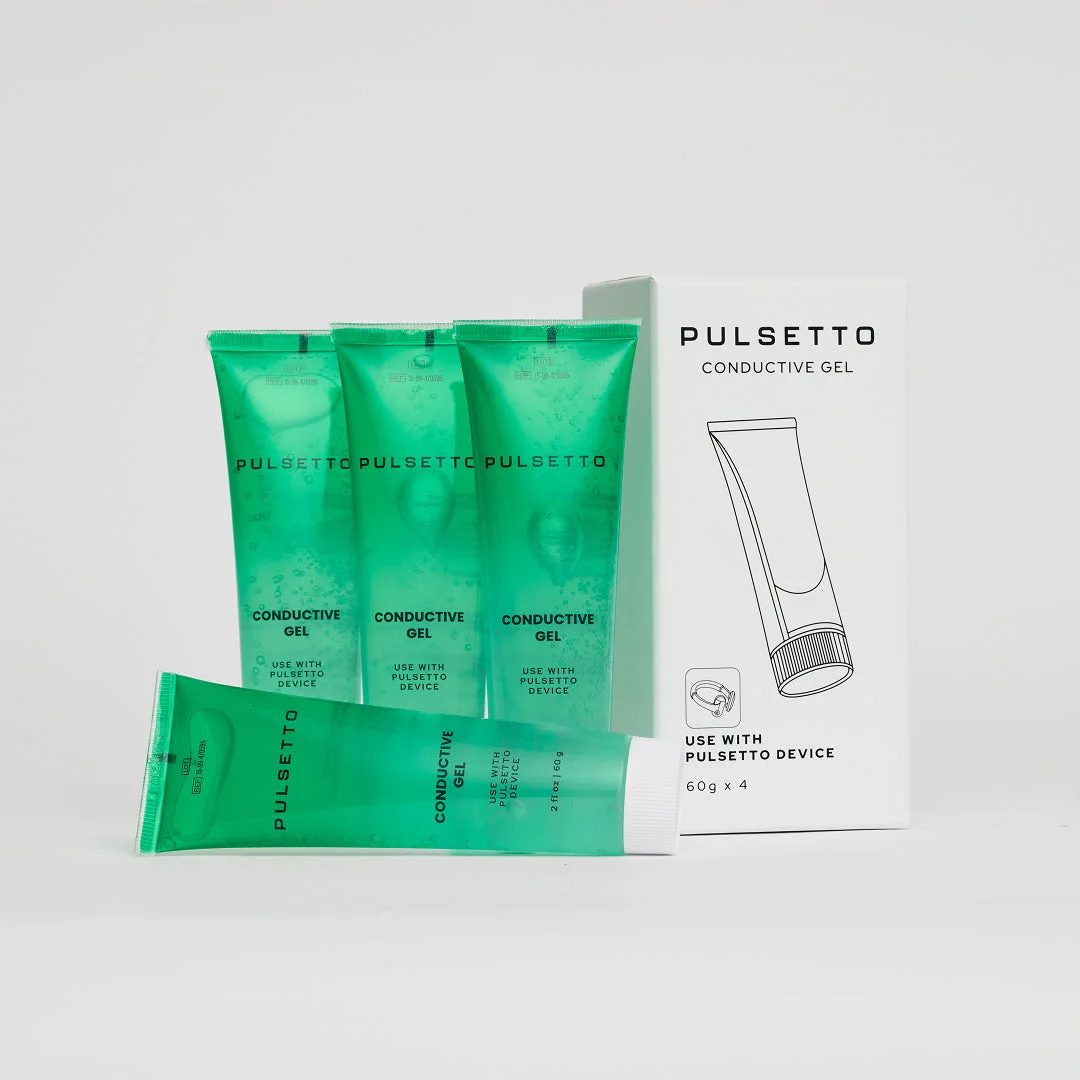
For people who struggle to stay consistent, a short routine with a clear start and finish can be more sustainable than an open-ended “try to relax.” It works best as one habit inside a broader calming routine — not as a magic switch, and not as a treatment for an anxiety disorder.
Pulsetto turns vagus nerve stimulation into a short, guided routine you can actually keep up with — available in single and multi-device value packs, backed by a 30-day money-back trial.
Explore Pulsetto Packages
Everyday anxious feelings are extremely common, and lifestyle habits can genuinely help the body settle. But they are not a substitute for care. If your anxiety is frequent or intense, interferes with work, sleep or relationships, or comes with panic attacks, chest pain, or thoughts of self-harm, please speak with a qualified healthcare professional. Persistent anxiety is common and treatable, and the habits above work best alongside proper support rather than instead of it. If you have a heart condition, epilepsy, an implanted electronic device, or you are pregnant, talk to your doctor before trying any form of nerve stimulation.
There is usually a reason — it just is not obvious in the moment. Feeling anxious for no reason often traces back to a nervous system running in a low-grade stress state, kept there by poor sleep, high caffeine, skipped meals and blood-sugar dips, chronic stress and elevated cortisol, or too little downtime. Your body reads these cues as pressure and produces the physical feeling of anxiety even when nothing threatening is happening.
It can feel that way, but the nervous system usually builds up to it. Accumulated stress, broken sleep and stimulants can leave your fight-or-flight response primed, so a small trigger — or no obvious trigger at all — tips you into anxious feelings. That is why calming the body across the whole day, not just in the anxious moment, tends to help most.
Slow breathing with a longer exhale is the quickest lever most people have — in for about four seconds, out for six to eight, for a few rounds. Cool water on the face, a brisk walk, or humming can also help nudge the body toward its rest-and-digest state. These are general calming techniques, not a treatment for an anxiety disorder.
If anxiety is frequent, intense, interferes with daily life, or comes with panic attacks, chest pain or thoughts of self-harm, speak with a qualified healthcare professional. Persistent anxiety is common and treatable, and lifestyle habits work best alongside — not instead of — proper care.
The vagus nerve leads the parasympathetic, rest-and-digest side of your nervous system that counterbalances the stress response. Higher vagal tone is generally associated with a body that settles more easily after stress, which is why breathing, movement and gentle vagus-focused routines are popular for everyday calm.
| Who we are | An independent team that reviews nerve-health research and translates it into plain-English, practical guides for everyday readers. |
| How we work | Every article is fact-checked against reputable clinical and educational sources and updated as the science evolves. |
| Our promise | General wellbeing information, never medical advice — and we always flag when to see a professional. |
† These statements have not been evaluated by the FDA. Pulsetto is a general-wellbeing device, not a medical device or treatment, and is not intended to diagnose, treat, cure or prevent any disease. This article is for general information only and is not medical advice. Affiliate disclosure: pulsettoos.com is an independent guide, not the manufacturer or the seller. Some links on this page are affiliate links and we may earn a commission if you buy through them, at no extra cost to you. That never changes the price you pay or what we write.