
| What it is | The vagus nerve is the main pathway of your body’s “rest-and-digest” calm response. |
| Why it matters | Higher vagal tone is linked with a body that settles more easily after stress. |
| Fastest method | Slow breathing with a long exhale — in for 4, out for 6–8. |
| Daily habits | Breathing, humming, cold exposure, movement, sleep — and tVNS devices. |
If you have ever felt your heart pound before a presentation and then slowly settle afterward, you have felt your vagus nerve at work. The vagus is the longest cranial nerve in the body, wandering from the brainstem down through the neck to the heart, lungs and gut. It is the main highway of the parasympathetic nervous system — the “rest-and-digest” side of your wiring that counterbalances the “fight-or-flight” stress response.
Researchers often talk about vagal tone: a measure of how active and responsive this calming system is. It is commonly estimated through heart rate variability (HRV), the natural beat-to-beat variation in your pulse. In general, a more responsive vagus is associated with a body that recovers from stress more smoothly — and, for many people, with steadier moods and easier sleep. HRV is the standard index of cardiac vagal tone used in psychophysiological research, with the caveat that it is an estimate rather than a direct reading of the nerve.
If that description lands, the fuller picture is in why you feel stuck in fight-or-flight mode. Constant notifications, packed schedules and late-night screens can leave the nervous system stuck in a low-grade state of alert. Common signs people describe include:
None of these are diagnoses on their own, and they can have many causes. But together they are a familiar picture: a body that has forgotten how to downshift. The good news is that vagal tone is trainable — and most of the tools are simple, free and available right now.
You do not need anything fancy to start. Think of these as small, repeatable nudges rather than a rigid program.
This is the fastest lever you have. Try breathing in through the nose for about four seconds and out slowly for six to eight. Our roundup of the best breathing exercises for anxiety and stress relief covers four more patterns and when each one suits. The extended exhale gently activates the vagus and tips you toward calm, often within a handful of breaths. A few rounds before a meeting — or before sleep — can be enough to feel the shift.
The vagus connects to the muscles at the back of your throat and around the voice box. Humming, gargling or singing creates gentle vibration in that area, which is a low-effort way to give the nerve a nudge. It is why a long sigh or a favourite song can feel so disproportionately soothing. Small studies have looked at exactly this: Holter monitoring during humming (Bhramari) recorded changes in heart rate variability compared with physical activity and emotional stress, and a pilot study compared slow-paced breathing with humming breathing on heart rate variability and affect. These are small trials, not proof.
Splashing cold water on your face, ending a shower cool, or stepping outside on a cold morning can prompt a calming reflex linked to vagal activity. Start gentle and brief — the goal is a small, tolerable jolt, not an endurance test. A study of cold water intake in young women found co-activation of both branches of the autonomic nervous system rather than a purely calming effect, so treat cold as a jolt that resets attention rather than a straightforward relaxant.
Regular, moderate movement — walking, cycling, yoga — is consistently associated with healthier HRV over time. You are not chasing a personal best; you are teaching your nervous system that it can ramp up and, crucially, come back down again.
Sleep and vagal tone reinforce each other, which is why a warm nervous system so often shows up as a 3am wake-up — see why you wake up at 3am and can’t fall back asleep. A steady bedtime, a dark cool room and a screen-light buffer before bed all help your body rehearse the wind-down it needs. Vagus-friendly habits earlier in the day make that wind-down easier at night.
Unhurried conversation, time in nature and gentle laughter all engage the social, calming side of the nervous system. So does what you eat around them — our guide to foods that calm the nervous system covers the steady-blood-sugar side of the same habit. These are not “soft” extras — they are direct inputs to the same rest-and-digest circuitry.
Alongside these habits, a growing category of non-invasive devices aims to stimulate the vagus nerve directly through the skin of the neck or ear — an approach known as transcutaneous vagus nerve stimulation, or tVNS. Instead of a needle or an implant, these tools deliver mild electrical pulses through a surface contact point.
See the Pulsetto Vagus Nerve Device
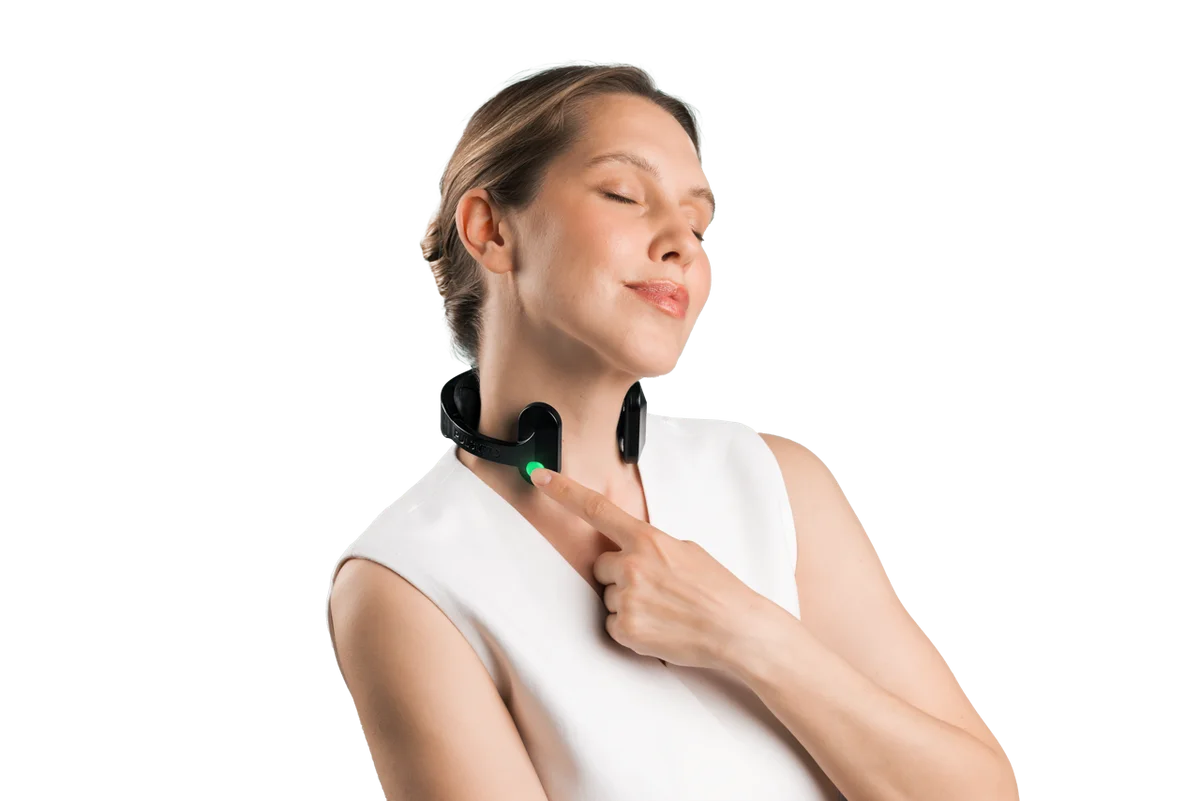
Pulsetto is one example of an at-home tVNS wearable. It rests on the neck, uses a little conductive gel to help the pulses travel comfortably, and runs short, app-guided sessions of about four minutes. You choose a program — stress, anxiety, sleep or burnout — set an intensity that feels comfortable, and relax while the session runs.
The appeal of a device is not that it replaces breathing, movement or good sleep — it is that it makes one more calming input easy to keep up with. For people who struggle to stay consistent, a four-minute routine with a clear start and finish can be more sustainable than an open-ended “try to relax.” It works best as one habit inside a broader routine, not as a magic switch.
Vagus nerve stimulation is a genuinely active field of research. Studies have explored how tVNS relates to heart rate variability, stress markers and mood, with a number of small trials reporting encouraging signals for relaxation and recovery. At the same time, much of this work is early-stage, sample sizes are often small, and effects vary between people. Specifically: an analysis of stimulation parameters and targets in auricular tVNS and heart rate variability; a sham-controlled pilot of cervical tVNS and the PACAP stress response; a trial reporting that non-invasive vagus nerve stimulation boosted mood recovery after effort exertion; a randomised crossover study of frequency and pulse width effects on heart rate variability in healthy adults; and a single-blinded randomised trial of tVNS, subthreshold affective symptoms and perceived stress in community-dwelling adults.
So the honest summary is this: the underlying idea — that gently engaging the vagus can support the body’s calm response — is well established, while the specifics of any single consumer device are still being studied. Pulsetto is intended for general relaxation and wellbeing, not as a treatment for any medical condition. If you have a heart condition, epilepsy, an implanted electronic device, or you are pregnant or under medical care, talk to your doctor before trying any form of nerve stimulation.
Pick two or three of these and repeat them daily for a couple of weeks: a few rounds of long-exhale breathing when you wake, a short walk at lunch, and a wind-down ritual before bed — humming in the shower, a cool rinse, or a short tVNS session if you use a device. Consistency beats intensity. The aim is to remind your nervous system, a little every day, that it is safe to switch off.
Pulsetto turns vagus nerve stimulation into a short, guided routine you can actually keep up with — backed by a 30-day money-back trial.
Explore Pulsetto PackagesSlow breathing with a long exhale is the quickest at-home method — breathe in for about four seconds and out for six to eight. A longer exhale nudges the parasympathetic nervous system, which the vagus nerve leads, so your body starts to shift toward calm within a few breaths.
People often describe feeling wired but tired: a racing mind, tense shoulders, poor sleep, digestive upset and a heart rate that doesn’t settle after stress. Higher vagal tone is generally linked with a body that returns to baseline more easily after a stressful moment.
Yes. Non-invasive devices apply gentle transcutaneous vagus nerve stimulation (tVNS) through the skin of the neck or ear. Wearables such as Pulsetto are designed to make this a short, app-guided routine you can do at home, alongside breathing, movement and good sleep habits.
Breathing techniques can feel calming within minutes, while habits like consistent sleep, movement and daily practice tend to build over weeks. Vagus nerve routines work best as a steady daily habit rather than a one-off fix, and individual results vary.
† These statements have not been evaluated by the FDA. Pulsetto is a general-wellbeing device, not a medical device or treatment, and is not intended to diagnose, treat, cure or prevent any disease. This article is for general information only and is not medical advice. Affiliate disclosure: pulsettoos.com is an independent guide, not the manufacturer or the seller. Some links on this page are affiliate links and we may earn a commission if you buy through them, at no extra cost to you. That never changes the price you pay or what we write.