
| Short version | The best breathing exercises for anxiety share one thing: a slow, extended exhale that tells the body to relax. |
| Fast relief | The physiological sigh — a double inhale through the nose, then a long slow exhale — can help within seconds. |
| Go-to routines | Box breathing (4-4-4-4), 4-7-8 breathing for evenings, and coherent breathing at about six breaths a minute. |
| How long | Aim for a few minutes; even five minutes done daily beats an occasional long session. |
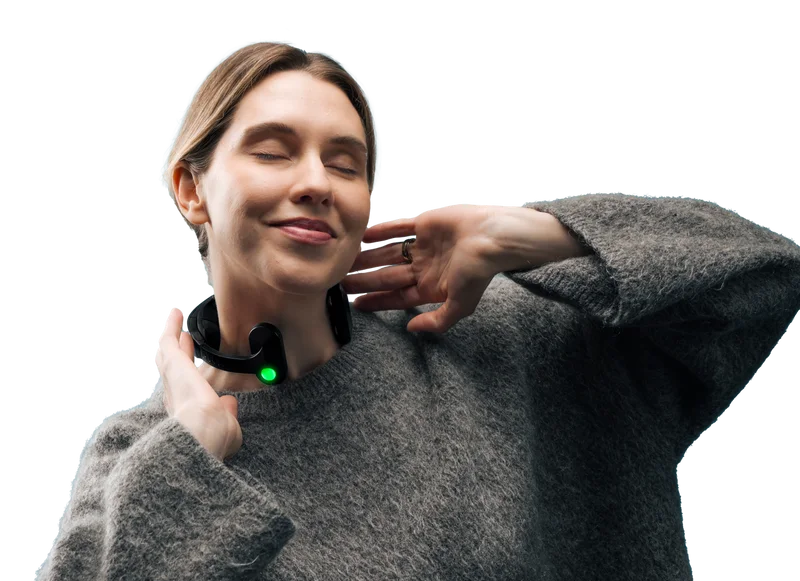
When anxiety spikes, your breath is usually the first thing to change — it becomes faster, shallower and stuck up in the chest. The good news is that breathing runs in both directions: just as stress changes your breath, deliberately changing your breath can steady your stress response. That is why the best breathing exercises for anxiety and stress relief are among the most practical, no-cost tools you can carry with you anywhere.
This guide walks through the techniques worth knowing, explains why they work in plain English, and shows how to fit them into an ordinary day. None of this is a treatment for any medical condition — it is simple, low-risk self-care that helps your nervous system downshift.
Your autonomic nervous system has two main branches. The sympathetic branch is the accelerator — it powers the fight-or-flight response, speeding the heart and priming muscles for action. The parasympathetic branch is the brake — the rest-and-digest state where the body recovers. Much of that braking travels along the vagus nerve, the long nerve that links the brain to the heart, lungs and gut.
Here is the key detail that makes breathing exercises for stress relief work: your heart rate naturally rises a little as you breathe in and falls a little as you breathe out. When you make the exhale longer and slower than the inhale, you spend more time in that "brake-on" phase. Over a few breaths, this gently nudges the body toward calm. You do not need to force anything dramatic — you are simply using a lever the body already has. If you want the fuller picture of how this pathway works, see our guide to stimulating the vagus nerve for stress and sleep. A systematic review of slow breathing found consistent shifts in autonomic, brain and psychological measures when people slow the breath, and a meta-analysis of voluntary slow breathing reported measurable effects on heart rate and heart rate variability.
Below are five techniques, roughly from fastest-acting to most restorative. Try them seated or lying down, breathe through your nose where you can, and keep everything gentle. If a specific count feels uncomfortable, shorten it.
This is the technique to reach for when anxiety surges and you need relief in seconds. Take one normal breath in through the nose, then — without exhaling — take a second, shorter sip of air on top to fully inflate the lungs. Then let a long, slow breath out through the mouth. Repeat one to three times. The double inhale helps reopen tiny air sacs in the lungs, and the extended exhale offloads carbon dioxide and signals the body to settle. It is discreet enough to do in a meeting or a queue. In a randomised comparison of brief daily breathwork practices, cyclic sighing improved mood and lowered respiratory rate more than mindfulness meditation over a month, and a later real-world study tested one minute of cyclic sighing against box breathing for acute anxiety.
Box breathing is a favourite for a reason: it is symmetrical, easy to remember and steadying under pressure. Breathe in for a count of four, hold for four, breathe out for four, and hold empty for four. That is one "box." Repeat for four to six rounds. The even rhythm gives your mind a simple anchor, which is part of why it helps when thoughts are racing. If holding your breath feels tense, drop the holds to a count of two.
This one leans heavily on a long exhale, which makes it well suited to evenings and pre-sleep. Breathe in quietly through the nose for four, hold for seven, then exhale slowly through the mouth for eight, ideally with a soft "whoosh." Start with just three or four cycles. Because the out-breath is twice the length of the in-breath, it strongly favours the calming side of the nervous system. If the seven-count hold is too much at first, try 4-4-8 and build up.
Coherent, or "resonant," breathing means slowing to roughly five or six breaths per minute — a smooth in for about five seconds and out for about five seconds, with no holds. This pace tends to bring the rhythms of the heart and breath into a steady, efficient pattern. It is less about a quick rescue and more about spending five to ten calm minutes to lower your overall stress baseline. Many people use it as a daily practice rather than an emergency tool. Reviews of slow breathing and heart rate variability place the strongest vagal response close to this pace, which is why it is the rate used in most biofeedback protocols.
Most of the techniques above work far better once you can breathe from the diaphragm rather than the upper chest. Rest one hand on your chest and one on your belly. Breathe so the lower hand rises while the upper hand stays relatively still. This deeper, low breathing is the foundation of calm breathing — if you only practise one thing, practise moving the breath down into the belly.
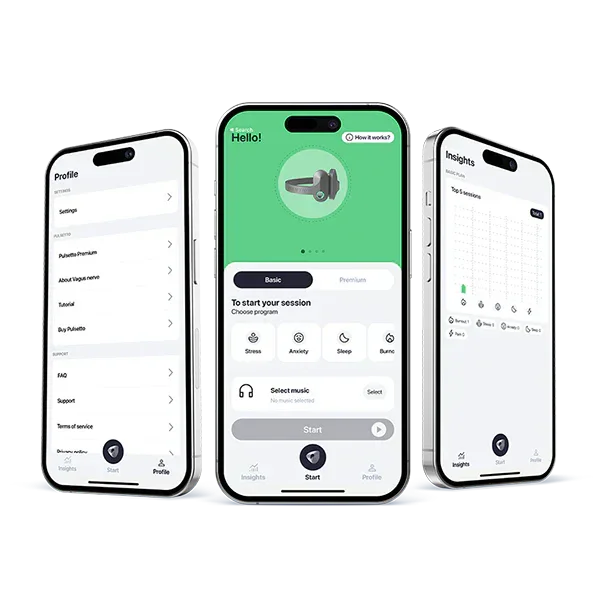
The techniques only help if you actually use them, so attach them to moments you already have:
Breathing works even better alongside the other basics of a calm nervous system — steady meals, movement and sleep. If you often feel switched on and unable to relax, it is worth reading why you feel stuck in fight-or-flight mode, which explains what keeps the accelerator pressed and how to release it.
See how Pulsetto supports daily calm
For a small number of people, focusing on the breath can briefly increase anxiety. Usually the fix is technique, not giving up:
If any technique makes you feel dizzy, panicky or unwell, stop and return to normal breathing. Breathing exercises are safe for most people, but they are not a substitute for professional care. The National Center for Complementary and Integrative Health makes the same point about relaxation practices generally: they are low-risk for most people, but they are not a treatment.
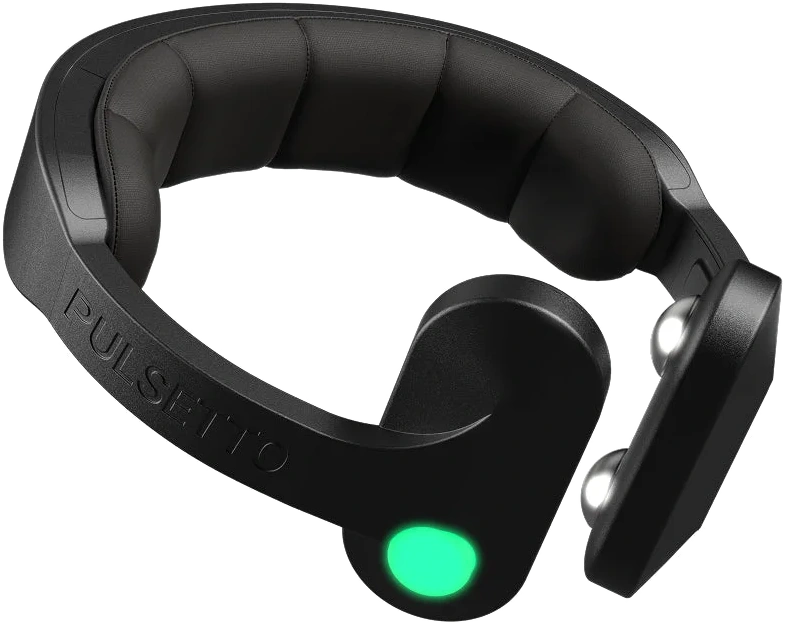
Pulsetto is an at-home wearable that delivers gentle transcutaneous vagus nerve stimulation (tVNS) through the neck in short, app-guided sessions of about four minutes. It targets the same rest-and-digest pathway that a slow exhale engages — which is why some people like to pair a breathing routine with a device session.
It is not a replacement for breathing practice, sleep or movement, and it is not a treatment for any condition. It is simply one more calming input that is easy to keep up with, sitting alongside the exercises in this guide. Pulsetto is intended for general relaxation and wellbeing.
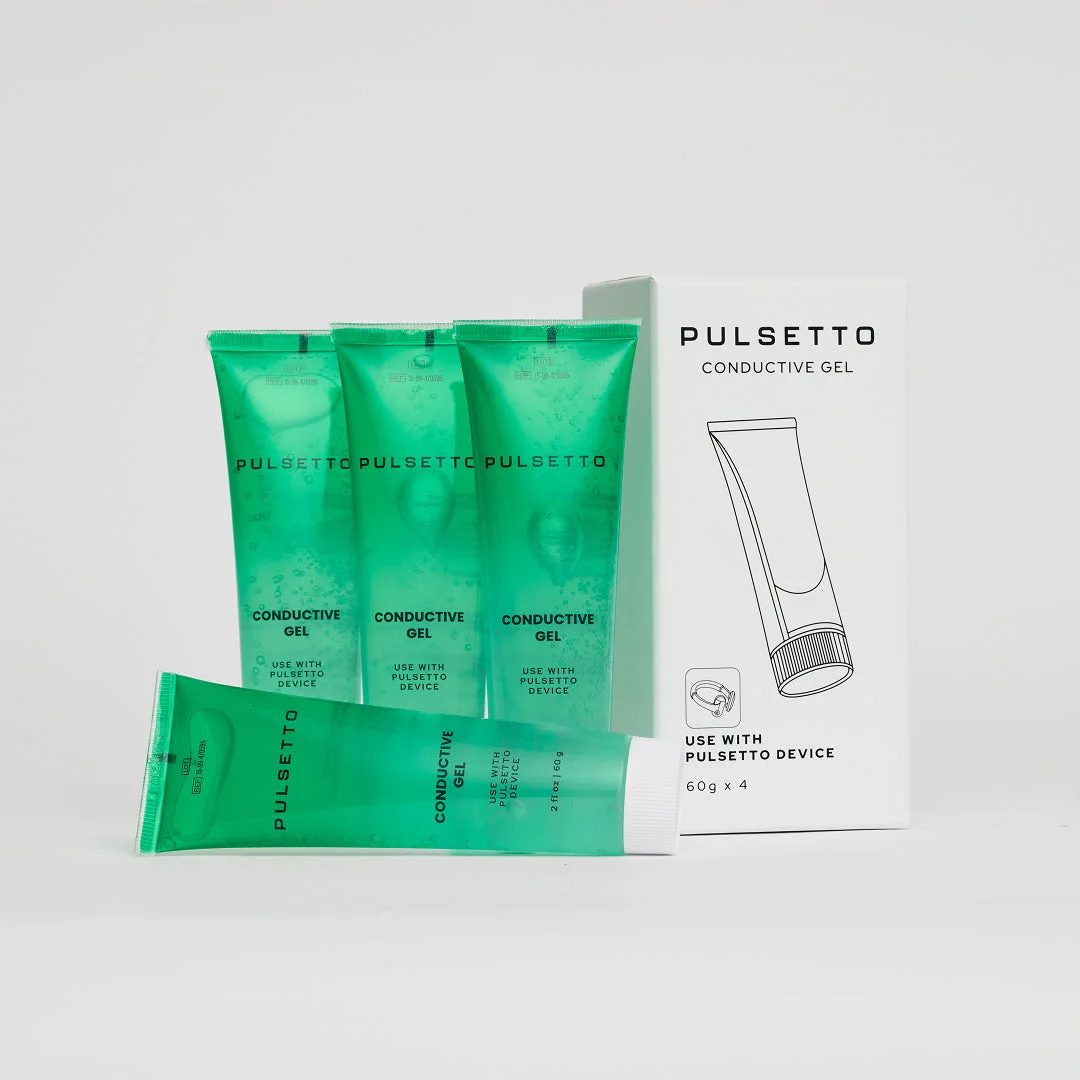
Pulsetto turns vagus nerve support into a short, guided daily routine — backed by a 30-day money-back trial. Explore single and multi-device packs plus the conductive-gel refills.
There is no single best exercise for everyone, but the most reliable starting points are box breathing (equal counts in, hold, out, hold), 4-7-8 breathing for winding down, and the physiological sigh for fast relief in the moment. The common thread is a slow, extended exhale, which is the part that signals the body to relax.
A long, slow exhale activates the parasympathetic (rest-and-digest) branch of the nervous system, largely through the vagus nerve. That tends to gently slow the heart rate and ease the physical feeling of tension, which is why lengthening the out-breath is the key to most calming techniques.
Many people notice a shift within one to three minutes of slow breathing, and a single physiological sigh can help in seconds. As a daily habit, even five minutes of slow, paced breathing is a practical target, and consistency matters more than long sessions.
No. Breathing exercises are a helpful, low-risk self-care tool for everyday stress, but they are not a treatment for any medical condition. If anxiety is frequent, intense or interfering with daily life, speak with a qualified healthcare professional. This article is general information only.
This happens to some people, especially when they force long holds or over-focus on the breath. Try gentler ratios, shorter holds, breathing through the nose, or simply making the exhale a little longer than the inhale. If any technique causes dizziness or distress, stop and breathe normally.
† These statements have not been evaluated by the FDA. Pulsetto is a general-wellbeing device, not a medical device or treatment, and is not intended to diagnose, treat, cure or prevent any disease. This article is for general information only and is not medical advice. Affiliate disclosure: pulsettoos.com is an independent guide, not the manufacturer or the seller. Some links on this page are affiliate links and we may earn a commission if you buy through them, at no extra cost to you. That never changes the price you pay or what we write.