
Call emergency services or seek urgent medical care if a pounding, racing or irregular heartbeat comes with chest pain or pressure, sudden or severe breathlessness, fainting or near-fainting, or if it will not settle. Also get checked promptly if palpitations are new, frequent, worsening, or you have a known heart condition. This article is about the everyday, stress-driven kind of flutter and is general information, not medical advice — it cannot tell your heart apart from your nerves, and neither can a wellbeing device. Pulsetto is a relaxation device, not a treatment, drug or cure for any heart, blood-pressure or anxiety condition.
| What it is | Palpitations are becoming aware of your heartbeat — pounding, fluttering or a skipped beat. |
| Why stress does it | Adrenaline from the fight-or-flight response speeds the heart with nowhere to run. |
| The brake | The vagus nerve helps slow the heart; you can engage it with slow breathing. |
| Fastest reset | Breathe in for 4, out for 6–8, drop the shoulders and let the exhale be long. |
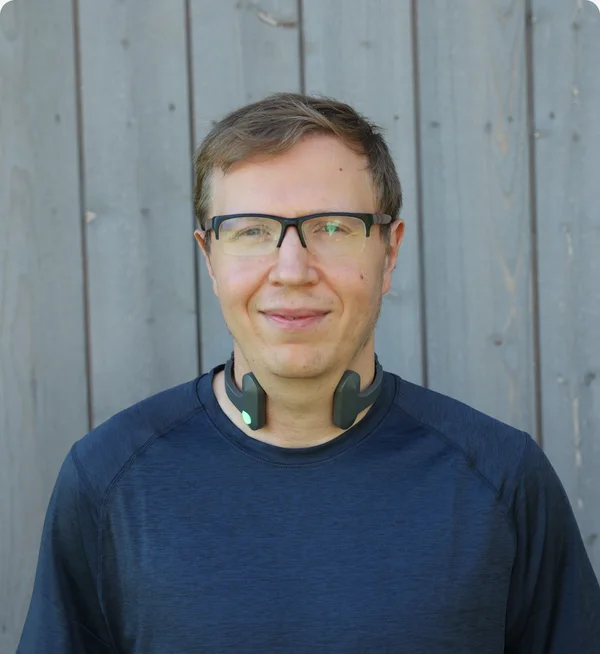
You are sitting still — maybe watching TV, maybe lying in bed — and suddenly you feel it: a thud, a flutter, a skipped beat, or a heart that seems to be sprinting for no reason. If that sounds familiar, you are not imagining it, and you are far from alone. Heart palpitations from stress and anxiety are one of the most common physical symptoms people describe when their nervous system is running hot, and understanding why they happen is the first step to calming them down.
“Palpitations” is simply the word for becoming aware of your own heartbeat. Normally your heart beats away in the background and you never notice it. During a palpitation, that awareness jumps to the front of your attention. People describe it in different ways:
When these sensations show up alongside a wave of worry, a tight chest or a rush of adrenaline, stress and anxiety are very often part of the picture. The heart is not broken — it is responding, exactly as designed, to a nervous system that thinks it needs to act.
Your body runs on two complementary settings. The sympathetic branch of the nervous system is the accelerator — the “fight-or-flight” response that gets you ready to react. The parasympathetic branch is the brake — the “rest-and-digest” state that lets you settle. Palpitations tend to happen when the accelerator is pressed and the brake is slow to respond.
When your brain registers a threat — and to an anxious nervous system, a stressful email can look a lot like a threat — it releases adrenaline (epinephrine) and cortisol. Adrenaline makes the heart beat faster and harder so more oxygen-rich blood reaches your muscles. That is genuinely useful if you need to sprint away from danger. It is a lot less useful at 11 p.m. when the only “danger” is tomorrow’s to-do list. The pounding you feel is that surge with nowhere to go.
This is the same loop behind so many stress symptoms, and it is why a body can feel wired even when nothing is physically wrong. If you often feel your heart race with a flood of unease you cannot explain, our guide to why you feel anxious for no reason unpacks the everyday drivers behind it.
Here is the encouraging part. Your heart has a brake, and it is called the vagus nerve — the long nerve that carries the parasympathetic signal from your brainstem down to your heart, lungs and gut. When vagal activity is high, it gently slows the heart between beats and helps you recover after a stressful moment. Researchers estimate this through heart rate variability (HRV): the natural variation in the gap between beats. A responsive vagus nerve is linked with a heart that settles more smoothly after a spike. Heart rate variability is the standard index of cardiac vagal tone in psychophysiological research, and the neurovisceral integration model describes how that vagal pathway links emotion regulation to cardiac control.
That matters because it gives you something to work with. You cannot simply order your heart to slow down — but you can engage the vagus nerve through breathing, movement and other calming inputs, and let it apply the brake for you. Learning to do that on purpose is the whole idea behind stimulating the vagus nerve for stress and sleep.
Stress rarely acts alone. A handful of ordinary habits can prime your heart to flutter, and many are easy to adjust:
Caffeine is a stimulant. On top of an already anxious nervous system, that second or third coffee can be the tipping point into a racing pulse. If you notice palpitations in the afternoon, look at what you drank that morning. Habitual intake may matter less than people assume — a community cohort found no association between regular coffee, tea or chocolate consumption and extra heartbeats on 24-hour monitoring — but an acute jolt on top of an anxious day is a different question, and many people can identify their own threshold.
Both can nudge the heart to beat faster. Skipping meals, then running on coffee, is a classic recipe for a shaky, thumping afternoon. Steady hydration and balanced meals smooth things out.
Alcohol — especially in the evening — is a well-known trigger for a racing heart overnight and the next day. Add a short night’s sleep and the nervous system becomes even more reactive. The two feed each other.
When we are anxious we tend to over-breathe without realising it. Hyperventilation changes the balance of gases in the blood and can itself produce a pounding heart, tingling and lightheadedness — which then feels alarming and drives more anxiety. Slowing the breath breaks that loop.
| Breathe | In through the nose for 4 seconds, out slowly for 6–8. Repeat six times. |
| Ground | Plant both feet, name five things you can see. This tells the brain you are safe. |
| Cool | Splash cool water on your face or hold something cold — a gentle vagal nudge. |
| Loosen | Drop the shoulders, unclench the jaw, let the next exhale be a long sigh. |
Most stress-related palpitations are harmless and pass quickly. But it is important to be sensible. Speak with a doctor — promptly — if palpitations come with chest pain, severe shortness of breath, fainting or dizziness, if they last a long time, or if they happen often, are getting worse, or you have a known heart condition. This article is about the everyday, stress-driven kind of fluttering, not a replacement for a proper check-up. When in doubt, get it looked at; peace of mind is worth the appointment. This is not over-caution: among patients referred for assessment with chest pain and palpitations, the eventual diagnoses split between cardiac and psychiatric causes, which is precisely why the two cannot be told apart at home. The National Heart, Lung, and Blood Institute lists the warning signs worth acting on.
Long-term, the goal is not to chase every flutter but to lower the background level of stress your heart is reacting to. These habits do exactly that:
See how a 4-minute vagus routine works A meta-analysis of voluntary slow breathing reported measurable effects on heart rate and heart rate variability.
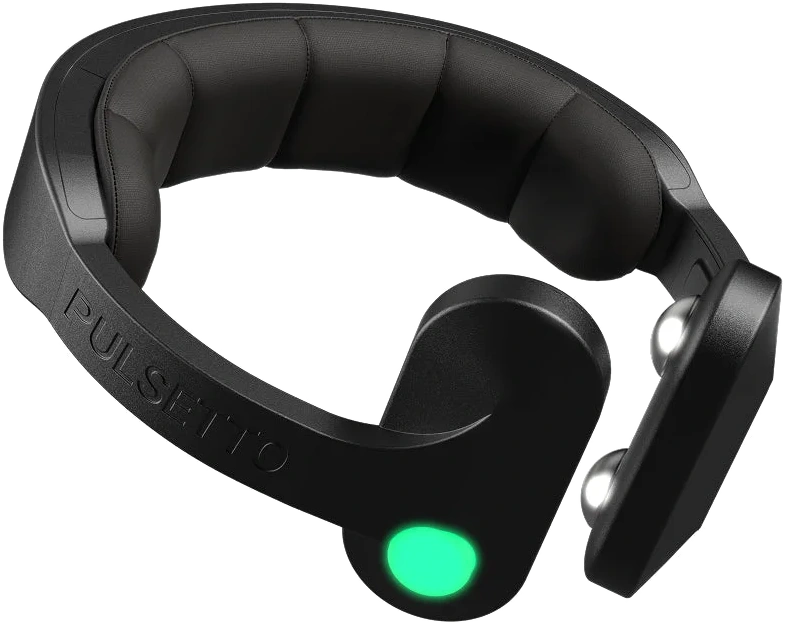
Pulsetto is one example of an at-home tool built around this idea. It is a wearable that rests on the neck and delivers gentle transcutaneous vagus nerve stimulation (tVNS) — mild pulses through the skin aimed at the vagus nerve — in short, app-guided sessions of about four minutes. You choose a program for stress, anxiety, sleep or burnout, set a comfortable intensity, and relax while it runs.
A device does not replace slow breathing, movement or good sleep — it simply makes one more calming input easy to keep up with. For people who find “just relax” frustratingly vague when their heart is pounding, a short routine with a clear start and finish can be a more doable anchor. It works best as one habit inside a broader calm-building routine, and Pulsetto is intended for general relaxation and wellbeing, not as a treatment for any heart or anxiety condition.
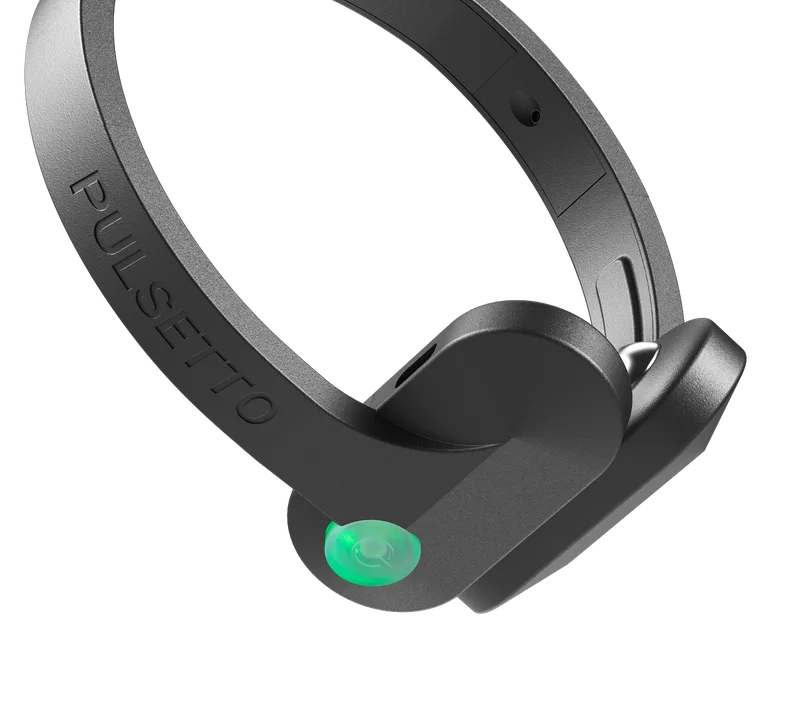
Pulsetto is personal — each person wears their own, so a multi-device pack drops the per-device price for the whole household. Every order is covered by a 30-day money-back trial.
Pulsetto turns vagus nerve stimulation into a short, guided routine you can actually keep up with — backed by a 30-day money-back trial.
Explore Pulsetto PackagesYes. When you feel anxious, your body releases adrenaline as part of the fight-or-flight response, which makes the heart beat faster and harder. That surge is a very common reason people become suddenly aware of a pounding or fluttering heartbeat, especially when they are otherwise sitting still.
Slow your breathing with a long exhale — in for about four seconds, out for six to eight — for six rounds. A longer exhale gently engages the vagus nerve, the body's calming brake. Grounding yourself, unclenching the jaw and dropping the shoulders can help the wave pass sooner.
Caffeine and energy drinks, alcohol, dehydration, skipping meals, and short or broken sleep can all make a stressed heart more likely to race or flutter. Rapid, shallow breathing when anxious can also produce a pounding heart on its own.
See a doctor promptly if palpitations come with chest pain, severe shortness of breath, fainting or dizziness, if they last a long time, happen often or are getting worse, or if you have a known heart condition. This article covers everyday stress-related palpitations and is not a substitute for medical care.
Non-invasive vagus nerve stimulation aims to engage the same calming pathway that helps the heart settle after stress. A wearable such as Pulsetto makes that a short daily routine, alongside breathing, movement and good sleep. It is intended for general relaxation and wellbeing, not as a treatment for any heart or anxiety condition.
† These statements have not been evaluated by the FDA. Pulsetto is a general-wellbeing device, not a medical device or treatment, and is not intended to diagnose, treat, cure or prevent any disease. This article is for general information only and is not medical advice. Affiliate disclosure: pulsettoos.com is an independent guide, not the manufacturer or the seller. Some links on this page are affiliate links and we may earn a commission if you buy through them, at no extra cost to you. That never changes the price you pay or what we write.
The Pulsetto Research Team is a small group of health writers, nervous-system educators and wellness researchers who translate the science of stress, sleep and the vagus nerve into plain, practical English. Every guide is fact-checked against peer-reviewed research and respected medical references before it is published, and reviewed again whenever the evidence moves. We write to inform, not to diagnose — our aim is to help you understand your body and make calmer, better-informed choices. This article reflects general research and traditional wellbeing practice; it is not a substitute for advice from your own doctor.