
| Why it happens | Brief wake-ups between sleep cycles are normal and cluster in the lighter second half of the night. |
| Why 3am | Cortisol starts rising toward morning and stress makes a light wake harder to fall back from. |
| In the moment | Don't clock-watch, keep lights off, breathe out slowly; if awake ~20 min, get up and do something quiet. |
| Prevent it | Consistent schedule, morning light, less late caffeine/alcohol, a real wind-down and lower daytime stress. |
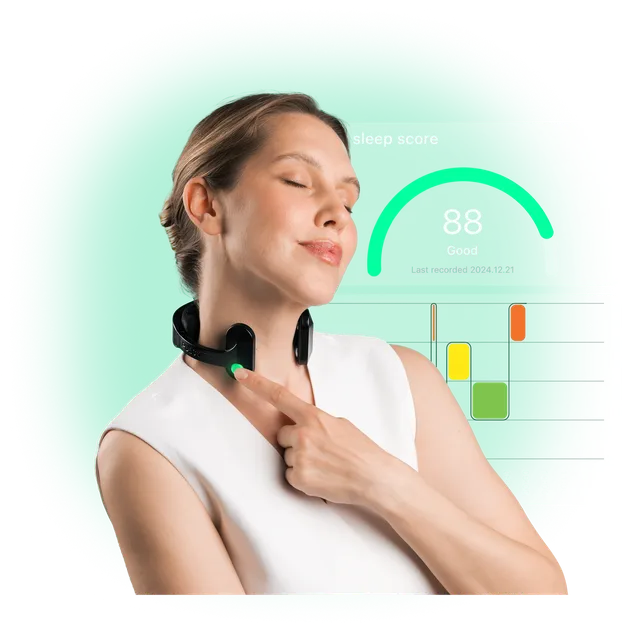
You drift off fine. Then, seemingly out of nowhere, your eyes open and the clock reads somewhere between 2 and 4am. Within seconds your mind is racing — tomorrow's to-do list, an awkward email, money, a worry you had forgotten about — and the harder you try to sleep, the more awake you feel. If you wake up at 3am and can't fall back asleep, you are in very common company, and there are clear reasons behind it.
This guide explains why the small hours are such a magnet for waking, what to do in the moment so you are not lying there for an hour, and the daily habits that make sleeping through more likely. None of it requires willpower at 3am — the real work happens during the day.
Here is the reassuring truth: everyone surfaces briefly between sleep cycles, several times a night. Usually you do not remember it because you slip straight back under. The issue is not the waking itself — it is what happens next. When your nervous system is running warm, a two-second surfacing turns into a full wake-up, and then a racing mind keeps you there. So the goal is rarely “never wake”; it is “wake briefly and drift back.” What turns a brief surfacing into an hour awake is arousal, not the wake itself — the hyperarousal model of insomnia describes a nervous system running above baseline around the clock.
A few overlapping factors make the small hours the classic wake-up window.
Deep sleep is front-loaded into the early night. As the night goes on you spend more time in lighter stages and dreaming sleep, which are easier to wake from. By the small hours, you are simply closer to the surface.
Cortisol, the main stress and wake hormone, naturally reaches a low around the middle of the night and then starts rising to prepare you for the day. If your baseline stress is high, that rise can feel like an alarm going off too early. Our guide on daily habits to lower cortisol naturally digs into that rhythm. Where baseline arousal is already high, that climb meets a system that is primed: a study of young adults with insomnia found altered psychological and physiological responses to a standardised laboratory stressor.
If you spend the day stuck in fight-or-flight mode, that keyed-up state does not switch off at bedtime. A light wake meets a brain that is primed to scan for problems, and the worrying begins.
Alcohol is a big one: it can help you fall asleep but tends to fragment the second half of the night as it wears off. A late, heavy meal, blood-sugar dips, a warm room, needing the bathroom, caffeine lingering in your system, and screen light late at night all add up too.
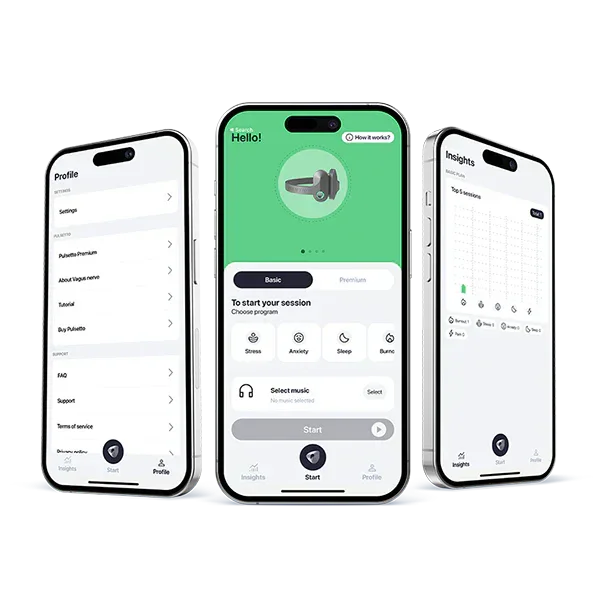
The middle of the night is not the time to solve your life. It is the time to lower the stakes so sleep can return.
See how Pulsetto supports a calmer night This is one component of cognitive behavioural therapy for insomnia, which a systematic review and meta-analysis found improved sleep onset, waking after sleep onset and sleep efficiency in chronic insomnia — and which is the first-line treatment if the problem is persistent.
Keep a consistent wake time, even on weekends, and get bright daylight soon after waking. A steady rhythm makes your sleep deeper and your night-time cortisol better behaved.
Cut caffeine after early afternoon if you are sensitive, keep alcohol modest and well before bed, and avoid large late meals. These are the biggest, most fixable causes of second-half-of-the-night waking. In a controlled study, caffeine taken even six hours before bed measurably reduced total sleep time; the Centers for Disease Control and Prevention sets out the wider sleep-hygiene basics.
Give your brain a runway: dim the lights an hour before bed, step away from screens, and do the same calming things each night so your body learns the cue. A cool, dark, quiet bedroom does a lot of the work for you.
Because a warm nervous system is the real reason a light wake becomes a long one, calming the day calms the night. Regular movement, time outdoors and stress-management practices all help. For the full method, see how to stimulate the vagus nerve for stress and sleep.
The vagus nerve leads the rest-and-digest response that eases you into and through sleep. Breathing and humming support it for free; some people also add short, non-invasive vagus nerve sessions as part of their wind-down.
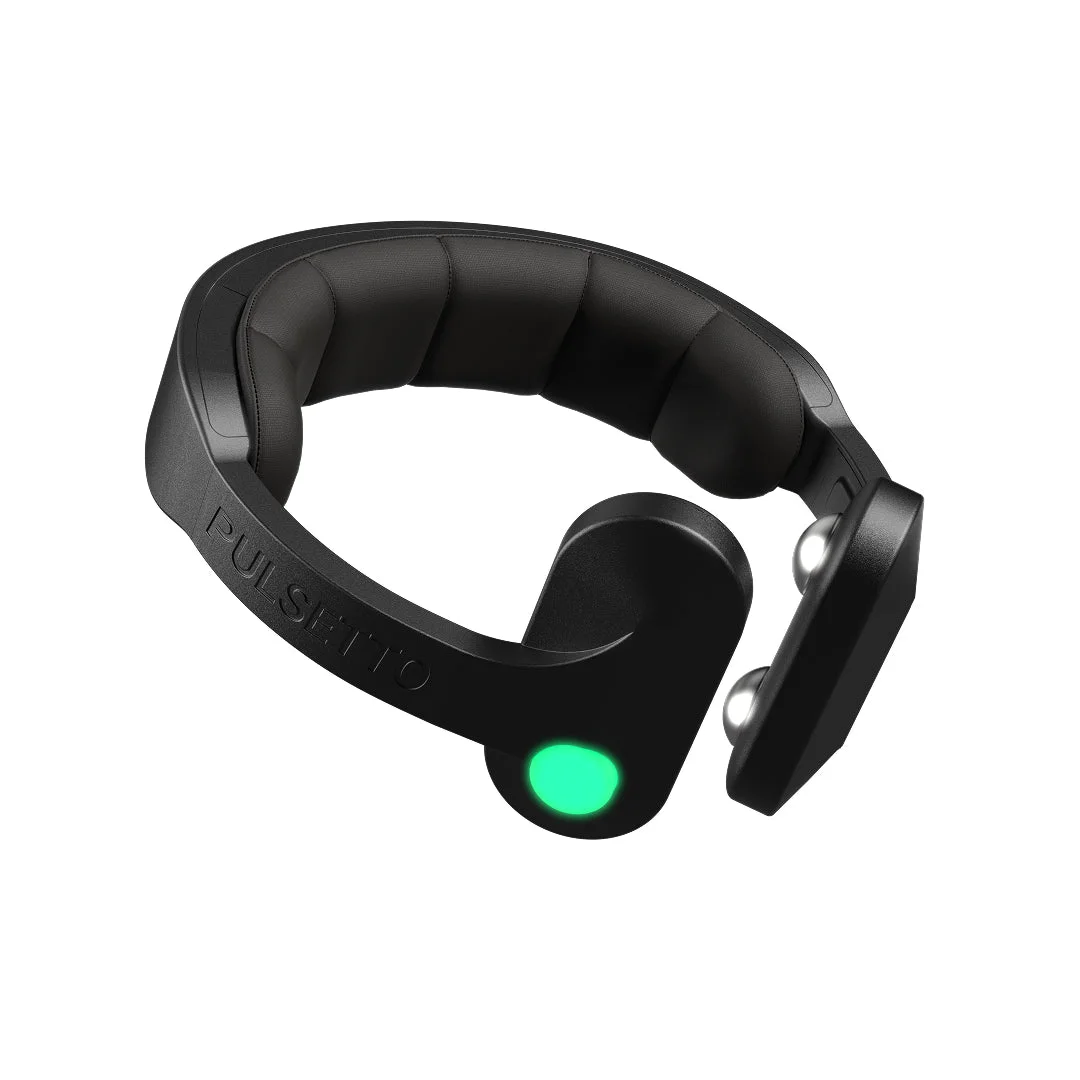
Pulsetto is an at-home wearable that delivers gentle transcutaneous vagus nerve stimulation (tVNS) through the neck in short, app-guided sessions of about four minutes, including a dedicated sleep program.
Used as part of an evening wind-down, a short session gives some people one more clear cue that the day is over. It is not a sleeping pill and does not treat insomnia — Pulsetto is intended for general relaxation and wellbeing, working best alongside the habits above.
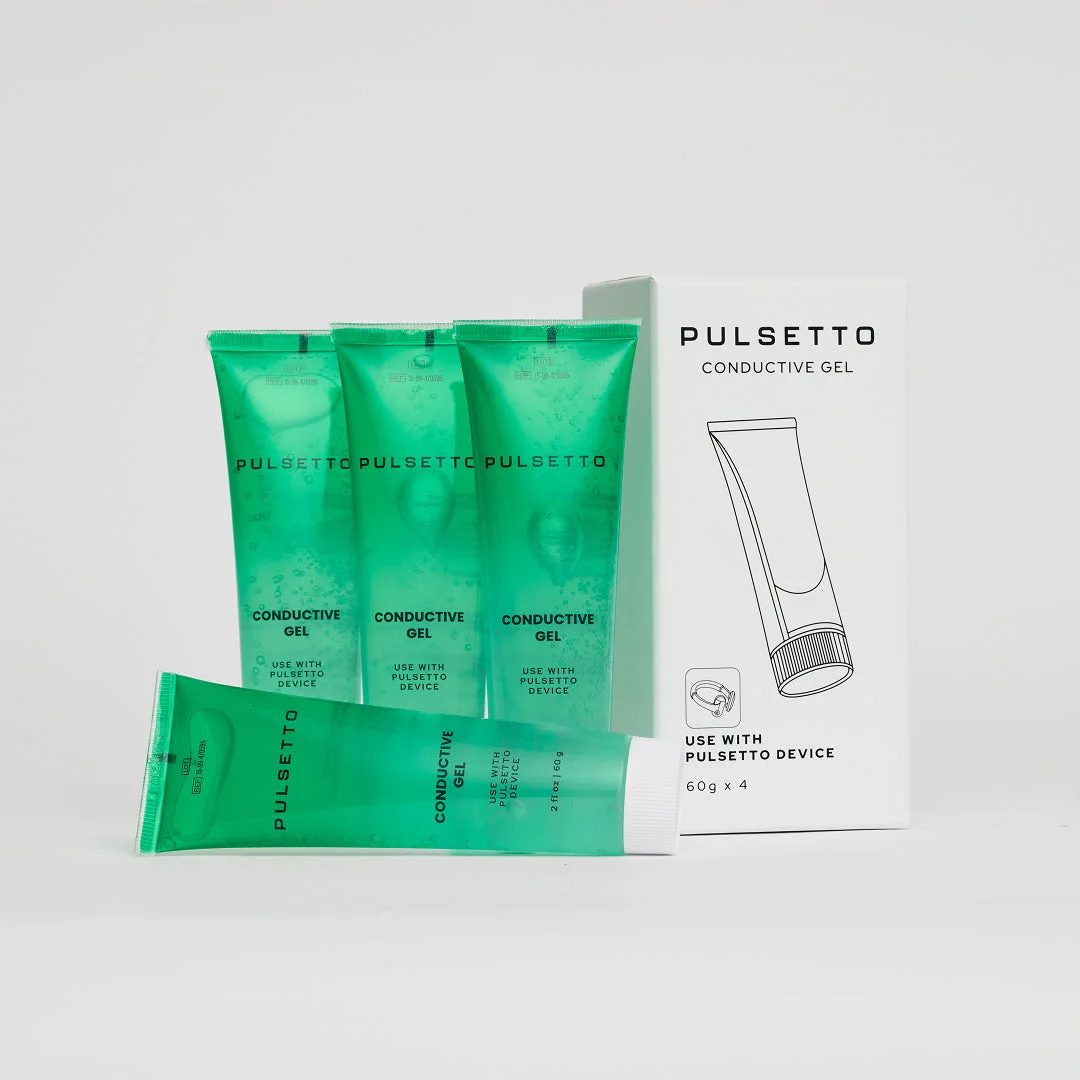
Pulsetto turns vagus nerve support into a short, guided routine you can add before bed — backed by a 30-day money-back trial. Explore single and multi-device packs and the conductive-gel refills.
Occasional night waking is normal, but persistent problems deserve attention. Please speak with a healthcare professional if night waking is frequent, leaves you exhausted during the day, or comes with loud snoring, gasping or pauses in breathing, or any chest symptoms. Chronic insomnia and sleep-disordered breathing are treatable, and these habits support general wellbeing rather than replacing medical assessment. If you have a heart condition, epilepsy, an implanted electronic device, or you are pregnant or under medical care, talk to your doctor before trying any form of nerve stimulation.
Brief awakenings between sleep cycles are normal, and they cluster in the lighter, second half of the night around 2am to 4am. Stress and a naturally rising cortisol rhythm toward morning make it easier to notice them and harder to drift off again, so a light wake becomes a long one.
Avoid clock-watching and bright screens. Try slow breathing with a long exhale to invite calm. If you are still awake after about 20 minutes, get up, keep the lights dim, do something quiet and boring, and return to bed when you feel sleepy again.
It can be one sign among many. A racing mind at 3am often reflects a nervous system that is running warm, so daytime stress spills into the night. It is common and usually improves with better sleep habits and stress management, but persistent insomnia deserves a professional's input.
Keep a consistent sleep and wake time, get morning daylight, limit late caffeine and alcohol, keep the bedroom cool and dark, and build a genuine wind-down routine. Supporting healthy vagal tone through breathing or non-invasive tVNS is another approach some people use.
If night waking is frequent, leaves you exhausted, or comes with loud snoring, gasping, or chest symptoms, speak with a healthcare professional. Chronic insomnia and sleep-disordered breathing are treatable, and lifestyle habits are not a substitute for medical assessment.
† These statements have not been evaluated by the FDA. Pulsetto is a general-wellbeing device, not a medical device or treatment, and is not intended to diagnose, treat, cure or prevent any disease. This article is for general information only and is not medical advice. Affiliate disclosure: pulsettoos.com is an independent guide, not the manufacturer or the seller. Some links on this page are affiliate links and we may earn a commission if you buy through them, at no extra cost to you. That never changes the price you pay or what we write.