
⚠️ First, the safety line: chest pain, a heartbeat that will not settle, fainting or sudden breathlessness are emergency symptoms — get urgent medical help rather than reading on. This article covers everyday, stress-related experiences and is general information, not medical advice. Nothing here, and no wellbeing device, is a treatment or cure for any medical condition.
| What it is | Being “stuck in fight-or-flight mode” means your stress response stays switched on when no threat is present. |
| Top signs | Racing heart at rest, shallow breathing, tense shoulders, poor sleep, gut upset, feeling wired but tired. |
| Common causes | Chronic stress, poor sleep, always-on screens, over-caffeination and a nervous system that never gets a real off-signal. |
| What helps | Long-exhale breathing, daily movement, morning light, steady sleep — and supporting vagal tone. |
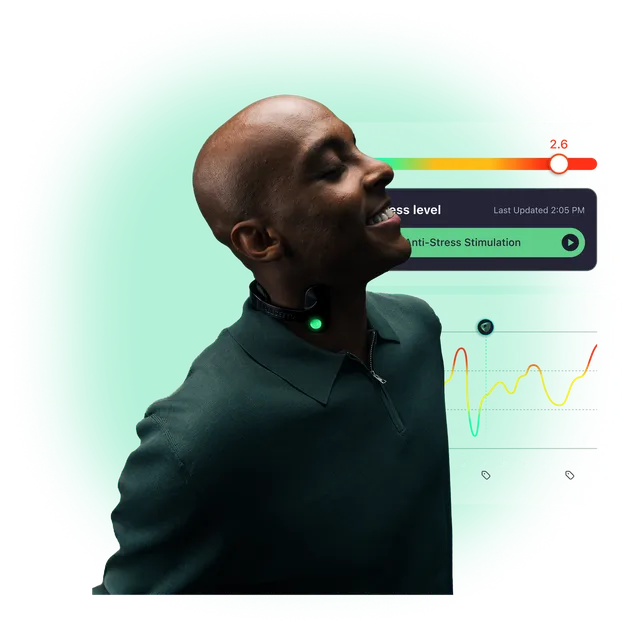
You get through the day, but your body never seems to get the memo that the emergency is over. Your shoulders sit up near your ears, your mind keeps scanning for the next problem, and even in a quiet room your heart feels like it is idling too high. If that sounds familiar, there is a good chance your nervous system is spending too much time in what people call fight-or-flight mode — and not enough time in the calmer state that is supposed to balance it out.
This is one of the most common patterns in modern nerve health. The stress response itself is not the villain; it is a brilliant, life-saving system. The problem is when it stops switching off. In this guide we will look at what fight-or-flight actually is, the everyday signs that you might be stuck in it, why it happens, and the simple, drug-free habits that help your body remember how to stand down.
Your autonomic nervous system has two main branches. The sympathetic branch is the accelerator: it speeds your heart, tightens muscles, sharpens focus and floods you with energy so you can respond to a challenge. This is the fight-or-flight response. The parasympathetic branch is the brake: it slows the heart, deepens breathing and shifts the body into “rest-and-digest” recovery. The main pathway of that calming brake is the vagus nerve. The neurovisceral integration model describes how the vagal brake links emotion regulation to heart-rate control, and what happens when that link is weak.
In a healthy rhythm, the accelerator and brake take turns. Something stressful happens, the sympathetic branch ramps you up, and once it passes the parasympathetic branch brings you back down. Being stuck in fight-or-flight mode is essentially a rhythm problem: the accelerator keeps running while the brake barely gets a turn.
No single symptom proves anything — each can have many explanations. But when several show up together and stick around, they paint a familiar picture of a nervous system that struggles to downshift.
If you recognise a cluster of these, you are not broken and you are not imagining it. You are describing a body that has learned to keep its accelerator pressed. The encouraging part is that this pattern is trainable in the other direction.
Fight-or-flight evolved for short, sharp threats — then a clear all-clear. Modern life rarely gives that clean ending. Instead it delivers a steady drip of low-grade alarms, and the nervous system responds to the drip as if it were one long emergency. A few of the biggest everyday drivers: The cost of an alarm that never resolves is what McEwen called allostatic load: the wear and damage caused by stress mediators when they stay switched on.
Deadlines, money worries, caregiving and a packed calendar keep the accelerator lightly pressed all day. Because none of it resolves with a dramatic finish, the body never receives a strong signal that it is safe to relax.
Sleep is when the parasympathetic system does much of its repair work. Short or fragmented sleep tips the balance back toward the sympathetic side, which then makes the next night harder — a loop that keeps you keyed up.
Constant notifications, doom-scrolling and late-night screens keep the brain in a mild state of vigilance. Each ping is a small “check this now,” and dozens a day add up to a mind that never gets to fully stand down.
Caffeine nudges the same stress chemistry that fight-or-flight relies on, and for many people the first sign is a heart they can suddenly feel — see heart palpitations from stress and anxiety. In sensitive people, or when it is taken late in the day, it can amplify a racing heart and jittery feeling and quietly undermine sleep.
Stress makes breathing fast and shallow — and fast, shallow breathing tells the brain to stay stressed. It becomes a self-reinforcing habit that keeps the alarm humming in the background.
For a deeper look at the daily levers that push cortisol up and down, see our guide to daily habits that help lower cortisol naturally.
Here is the hopeful part. The parasympathetic brake is not fragile — it just needs to be used. Because the vagus nerve is the main highway of that calming system, supporting healthy vagal tone is one of the most direct ways to help your body leave fight-or-flight more easily. Vagal tone is often estimated through heart rate variability, and a more responsive vagus is generally linked with a body that recovers from stress more smoothly. How responsive that brake is can be estimated from heart rate variability, the standard index of cardiac vagal tone.
The practical takeaway: you do not have to fight your stress response head-on. You can strengthen the counterbalance. If you want the full toolkit, our companion article on how to stimulate the vagus nerve for stress and sleep walks through the methods step by step.
See how Pulsetto supports everyday calm
Think of these as small, repeatable nudges toward the brake — not a rigid program. Pick two or three and repeat them daily.
This is the fastest lever you have. Breathe in through the nose for about four seconds and out slowly for six to eight. A longer exhale gently engages the vagus and tips you toward calm, often within a handful of breaths. Do a few rounds before a meeting, in traffic, or at bedtime. A meta-analysis of voluntary slow breathing reported measurable effects on heart rate and heart rate variability, and the National Center for Complementary and Integrative Health reviews relaxation techniques more broadly.
Do a ten-second body scan: unclench your jaw, drop your shoulders, soften your belly. If the jaw is where your tension lives, see jaw clenching and teeth grinding from stress; if it lands as a tight band around your head, see tension headaches from stress. Fight-or-flight lives in the muscles, and deliberately releasing them sends a safety signal back up to the brain.
Regular, moderate movement — a brisk walk, cycling, yoga — helps the nervous system practise ramping up and, crucially, coming back down. You are not chasing a personal best; you are rehearsing recovery.
A few minutes of daylight early on helps anchor your body clock, which supports steadier energy and easier evenings. Pair it with a consistent bedtime and a screen-light buffer before sleep so the parasympathetic side gets its turn overnight.
Because modern stress rarely ends with a bang, build your own endings: an unhurried conversation, time outdoors, a warm shower, a few minutes of humming or a favourite song. These are direct inputs to the same calming circuitry.
Alongside these habits, some people use non-invasive transcutaneous vagus nerve stimulation (tVNS) — mild pulses delivered through the skin of the neck — as one more calming input. It is not a replacement for breathing, movement or sleep; it is a way to make one more calm-building habit easy to keep up with.
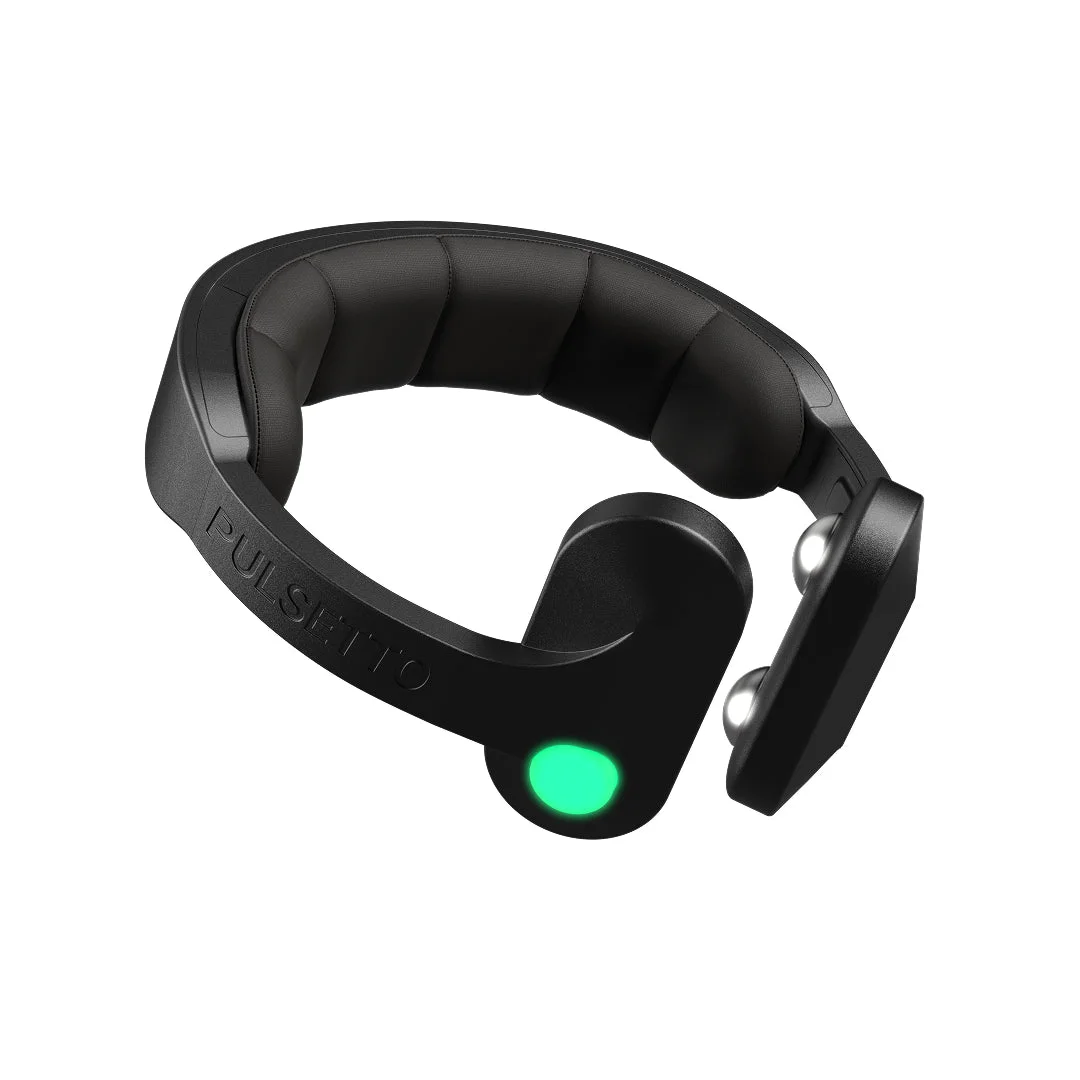
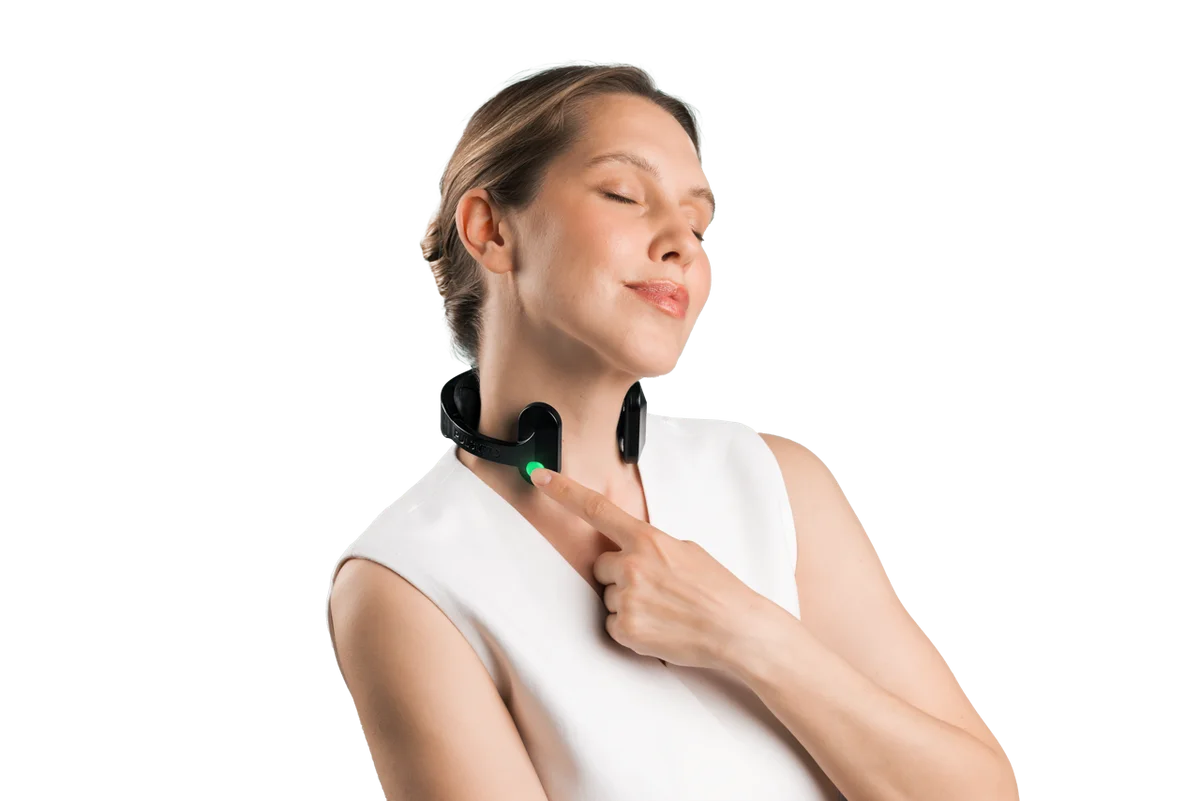
Pulsetto is an at-home tVNS wearable that rests on the neck and runs short, app-guided sessions of about four minutes. You choose a program — stress, anxiety, sleep or burnout — set a comfortable intensity, and relax while the session runs.
The appeal is consistency. For someone who feels stuck “always on,” a four-minute routine with a clear start and finish can be easier to stick with than an open-ended “try to relax.” It works best as one habit inside a broader calm-building routine, not as a magic switch. Pulsetto is intended for general relaxation and wellbeing, not as a treatment for any medical condition.
Pulsetto turns vagus nerve support into a short, guided daily habit — backed by a 30-day money-back trial. Explore the single device and multi-device packs.
Lifestyle habits support general wellbeing, but they are not a substitute for medical care. If constant tension, panic, chest symptoms, or sleeplessness disrupt your daily life, do not ease with these changes, or ever feel overwhelming, please speak with a healthcare professional. If you have a heart condition, epilepsy, an implanted electronic device, or you are pregnant or under medical care, talk to your doctor before trying any form of nerve stimulation.
It means the body's stress response stays switched on even when there is no real threat. Instead of spiking during a challenge and settling afterward, the sympathetic nervous system keeps running in the background, leaving you tense, wired and unable to fully relax.
Common signs include a fast or pounding heartbeat at rest, shallow chest breathing, tense shoulders and jaw, trouble falling or staying asleep, digestive upset, irritability and feeling wired but tired. None is a diagnosis on its own, but together they point to a body that struggles to downshift.
Start with a longer exhale than inhale, unclench your jaw and drop your shoulders, then add daily anchors like movement, morning light, steady sleep and less late-day caffeine. These habits gently engage the parasympathetic, rest-and-digest side of the nervous system that counterbalances the stress response.
The vagus nerve is the main pathway of the parasympathetic nervous system, so supporting healthy vagal tone through breathing, humming, movement and, for some people, non-invasive tVNS devices is a common way to help the body return to calm more easily. Individual results vary.
If constant tension, panic, chest symptoms or sleeplessness disrupt daily life, do not ease with lifestyle changes, or feel overwhelming, speak with a healthcare professional. Lifestyle habits support general wellbeing but are not a substitute for medical care.
† These statements have not been evaluated by the FDA. Pulsetto is a general-wellbeing device, not a medical device or treatment, and is not intended to diagnose, treat, cure or prevent any disease. This article is for general information only and is not medical advice. Affiliate disclosure: pulsettoos.com is an independent guide, not the manufacturer or the seller. Some links on this page are affiliate links and we may earn a commission if you buy through them, at no extra cost to you. That never changes the price you pay or what we write.