
| What it is | Bruxism — involuntary clenching or grinding of the teeth, awake or during sleep. |
| Why stress does it | The jaw is a first place tension lands when the nervous system braces. |
| Signs | Morning jaw ache, temple headaches, worn teeth and neck or shoulder tension. |
| What helps | Jaw awareness, gentle stretches, a calmer wind-down, and a dentist's night guard. |

Maybe you woke up with a sore, tired jaw. Maybe your partner has mentioned a grinding sound at night, or your dentist has pointed out worn-down teeth. Maybe you have simply caught yourself, mid-afternoon, with your teeth pressed hard together over nothing in particular. All of these point to the same thing: jaw clenching and teeth grinding from stress, a habit so common that most people do it without ever noticing.
The medical name is bruxism — the involuntary clenching, gnashing or grinding of the teeth. It comes in two flavours, and many people have both: An international consensus paper defines it as a masticatory muscle activity that occurs during sleep or wakefulness, and which in otherwise healthy people is a behaviour rather than a disorder.
The jaw muscles are among the strongest in the body, so hours of low-grade clenching add up to a surprising amount of strain.
Clenching is, at its core, a bracing response. When your nervous system is on alert, your body tenses in readiness — and the jaw is one of the first places that tension lands. Think of the phrase “grit your teeth” and “set your jaw”: the language itself tells you how tightly linked jaw tension and stress are. That is broadly what the research describes: a review of the role of psychosocial factors in the aetiology of bruxism concluded that stress and personality traits are associated with it, particularly the awake kind, while the evidence is weaker and more mixed for sleep bruxism.
During the day, a tense, focused, or frustrated state keeps the jaw subtly engaged. At night, an over-activated nervous system carries that tension into sleep, where grinding tends to cluster around lighter sleep stages. This is the same “stuck in gear” pattern behind a lot of stress symptoms — if your body rarely feels like it fully switches off, our guide to why you feel stuck in fight-or-flight mode explains the underlying state well. A recent review of muscle tone regulation and bruxism under chronic stress traces the same pathway from a sustained stress response to sustained jaw-muscle activity.
Because so much of it happens unconsciously, bruxism is often spotted through its effects rather than the act itself:
Because the jaw, temples, neck and shoulders share so much muscular real estate, clenching frequently travels with neck and shoulder tension and with tension-type headaches. Treat them as one connected pattern rather than separate problems. That clustering shows up in the data too: a cross-sectional study found an association among self-reported bruxism, stress and headache.
You cannot consciously control grinding while you sleep, but you can lower the overall tension your jaw carries and change the daytime habit. These steps help most:
Through the day, check in: are your teeth touching? They should not be, except briefly when you swallow or chew. The resting position is lips together, teeth slightly apart, tongue resting gently on the roof of the mouth. A sticky note on your monitor or a phone reminder can retrain this surprisingly fast.
Gentle jaw stretches, slow open-and-close movements, and light massage of the muscles at the angle of the jaw and temples can ease tightness. Warmth — a warm cloth held to the jaw — helps the muscles let go.
Because sleep grinding tracks with an activated nervous system, a genuine wind-down matters. Slow breathing, dimmed lights and a screen buffer all help you enter sleep in a calmer state. The same breathing exercises for stress relief that quiet a racing mind also help unclench the jaw.
Ease off caffeine and alcohol, especially in the evening, and take regular posture breaks if you work at a screen.
A dentist can spot the tell-tale wear, check your jaw joint, and — if needed — fit a custom night guard to protect your teeth while you work on the underlying tension. This is worth doing if you have signs of grinding; the habits below reduce the driving force, but a guard protects the teeth in the meantime.
See a 4-minute daily calm routine
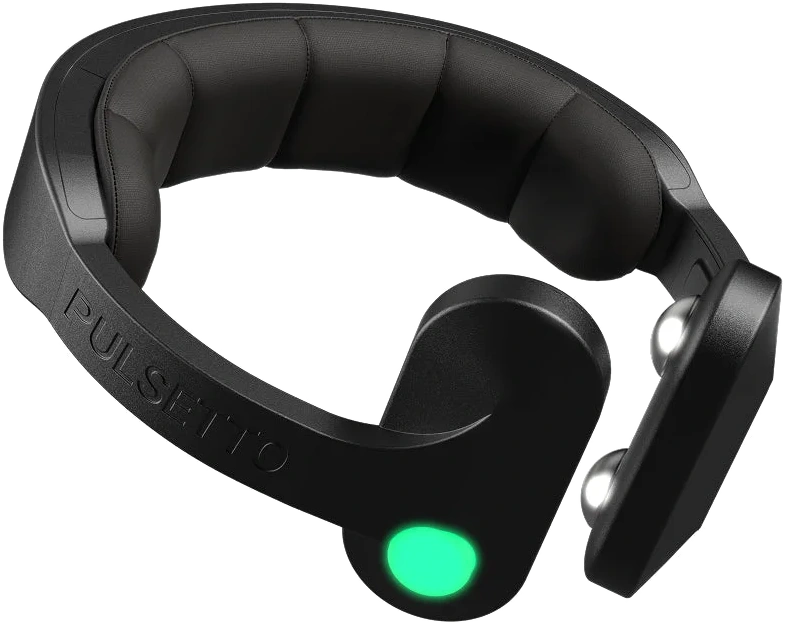
Since jaw clenching is fundamentally a tension habit, the most useful long-term move is to help your nervous system spend more time in its calm, “rest-and-digest” state — the state in which braced muscles, jaw included, finally release. The vagus nerve leads that calming branch, and slow breathing, warmth, movement and good sleep all help engage it.
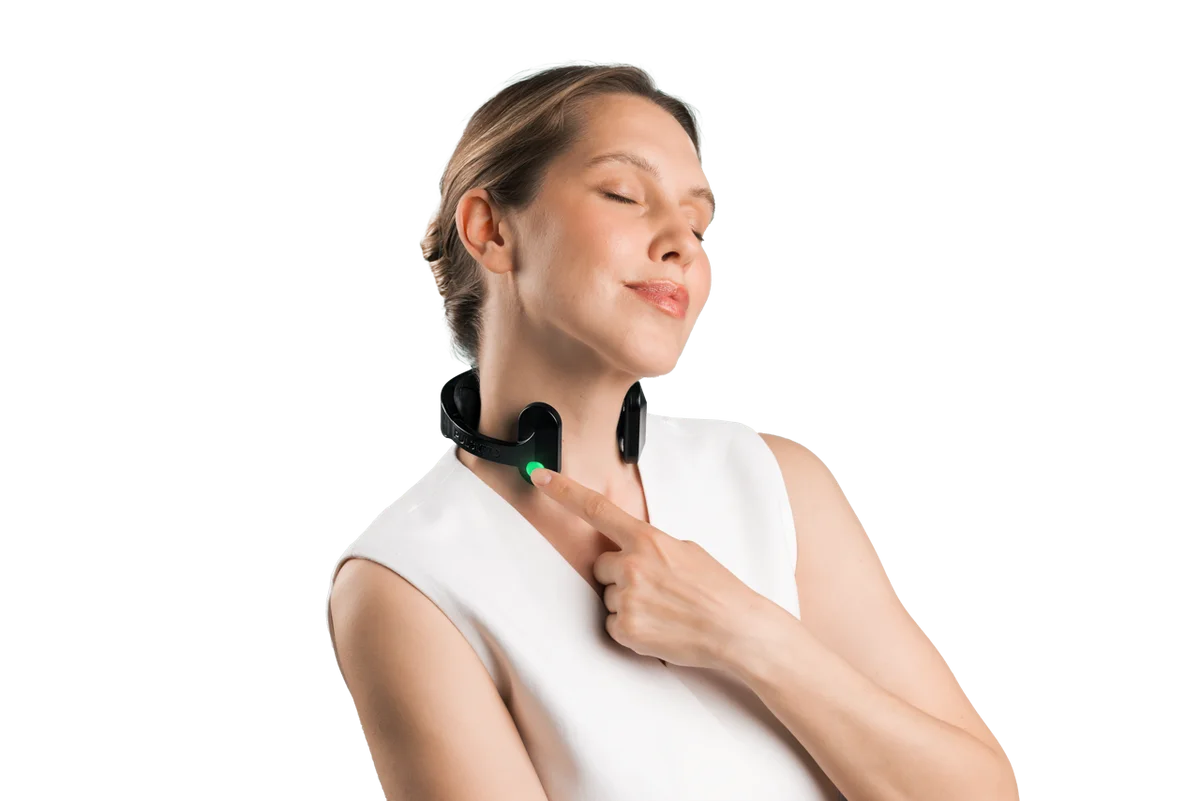
Pulsetto is one at-home tool built around this. It is a wearable that rests on the neck and delivers gentle transcutaneous vagus nerve stimulation (tVNS) in short, app-guided sessions of about four minutes — a simple way to add a calming wind-down before bed, when clenching often does its damage. It does not stop grinding directly and is not a substitute for a dentist’s advice or a night guard; think of it as one more way to help a braced nervous system downshift. Pulsetto is intended for general relaxation and wellbeing, not as a treatment for bruxism or any medical condition. If tension headaches ride along with your clenching, our guide to tension headaches from stress covers the overlap.
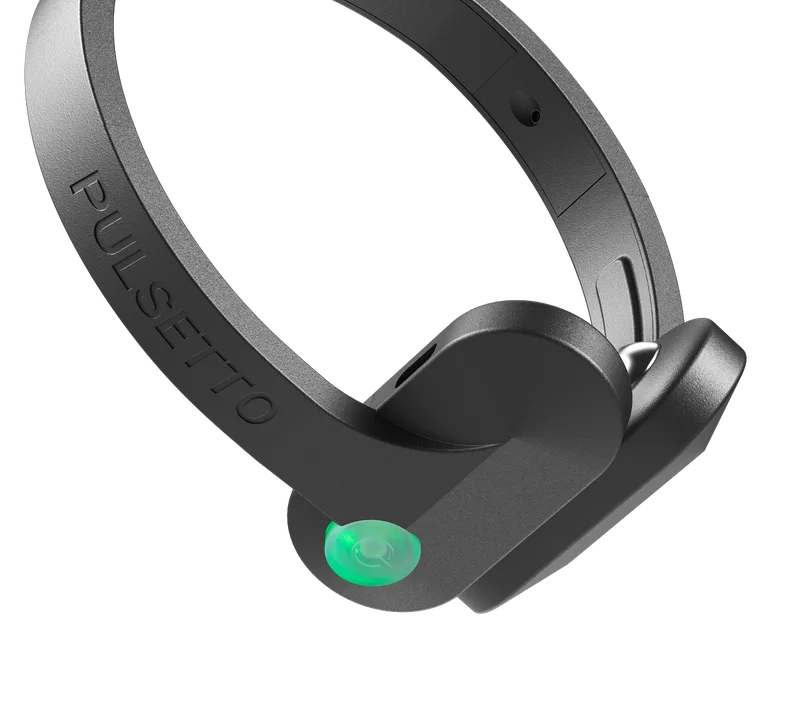
Pulsetto is personal — each person wears their own, so a multi-device pack drops the per-device price for the whole household. Every order is covered by a 30-day money-back trial.
Pulsetto makes a short, guided wind-down easy to build into your evening — a gentle, drug-free session backed by a 30-day money-back trial.
Explore Pulsetto PackagesClenching is a bracing response. When your nervous system is on alert, your body tenses in readiness, and the jaw is one of the first places that tension shows up. During the day a tense or focused state keeps the jaw engaged; at night an over-activated nervous system can carry that tension into sleep as grinding.
Sleep grinding is often noticed through its effects: a sore or tired jaw in the morning, temple headaches, aching that spreads to the neck, clicking in the jaw joint, worn or sensitive teeth, or a partner hearing the sound. A dentist can confirm it by spotting tell-tale wear.
Build a daytime awareness habit so your teeth rest slightly apart rather than touching, use gentle jaw stretches and warmth to release the muscles, and calm your nervous system before bed with slow breathing and a proper wind-down. Easing caffeine and alcohol and taking posture breaks also help.
Yes, if you have signs such as worn teeth, jaw pain or frequent headaches. A dentist can check your teeth and jaw joint and, if needed, fit a custom night guard to protect your teeth while you work on the underlying tension. Relaxation habits reduce the driving force; a guard protects the teeth.
A vagus nerve wearable such as Pulsetto does not stop grinding directly and is not a substitute for a dentist's advice or a night guard. It offers a short calming wind-down that helps a braced nervous system downshift, which is the state in which tense muscles let go. It is intended for general relaxation and wellbeing, not to treat bruxism.
† These statements have not been evaluated by the FDA. Pulsetto is a general-wellbeing device, not a medical device or treatment, and is not intended to diagnose, treat, cure or prevent any disease. This article is for general information only and is not medical advice. Affiliate disclosure: pulsettoos.com is an independent guide, not the manufacturer or the seller. Some links on this page are affiliate links and we may earn a commission if you buy through them, at no extra cost to you. That never changes the price you pay or what we write.
The Pulsetto Research Team is a small group of health writers, nervous-system educators and wellness researchers who translate the science of stress, sleep and the vagus nerve into plain, practical English. Every guide is fact-checked against peer-reviewed research and respected medical references before it is published, and reviewed again whenever the evidence moves. We write to inform, not to diagnose — our aim is to help you understand your body and make calmer, better-informed choices. This article reflects general research and traditional wellbeing practice; it is not a substitute for advice from your own doctor.